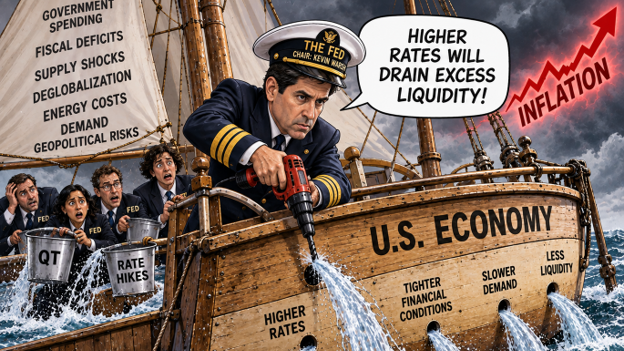
Wednesday, the Federal Reserve will announce whether it will raise, lower, or keep rates the same.
Last week, we saw inflation data show a 0.40% month over month increase.
The Fed looks at month over month movements, and compares the relative speed of the growth of prices as a warning sign that may require a rate hike. It was believed that anything over 0.30% month over month would signal a rate hike is coming.
Polymarket puts the odds at 78% in favor of a rate hike.
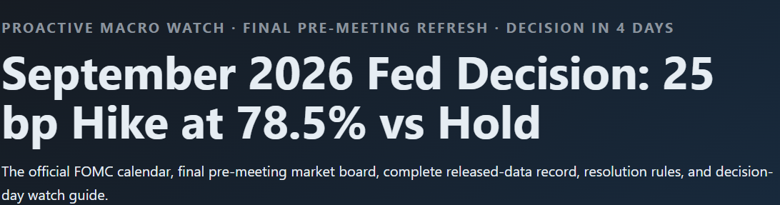
A rate hike is widely believed to be bearish for stocks and gold.
But there’s a problem with that kind of analysis. Higher interest rates in theory slow down the economy by raising borrowing rates for people and businesses, which theoretically cools off rising prices from the demand side.
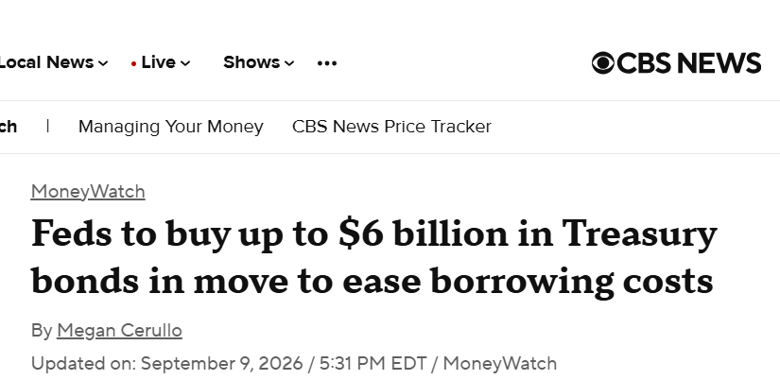
But what about the supply side? What about the number of dollars in the financial system? Treasury Secretary Bessent is now accelerating the purchase of Treasuries with the goal to shift more Treasuries towards shorter durations.
He’s doing so in an attempt to control yields on longer dated issuance, but by sliding the duration towards the short end, it means that higher rates (directly impacted by the Fed’s interest rate policy) translate as higher interest for short duration Treasuries.
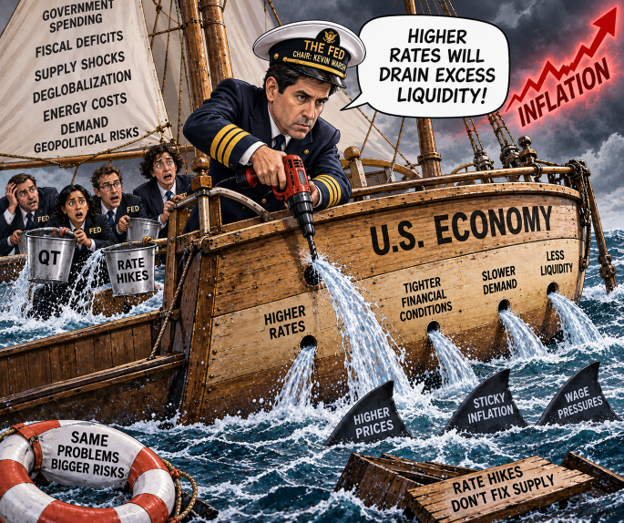
That higher interest comes from the Treasury… and is paid out into the real economy. It also translates directly into a larger share of the Federal budget being allocated towards interest payments.
Interest payments alone are expected to cost the US government $1 trillion in 2026. That’s more than 3% of GDP.
If Warsh and the Fed raise rates on Wednesday, the likely response from the market will be a dip in gold and stocks.
But long term? Every 0.5% rise in interest rates means something like an additional $66 billion in interest paid out every year.
That’s because about ⅓ of all Treasury debt is now held in durations of 1 year or less. Bessent is aggressively trying to get even more debt towards the shorter end of the curve.
Right now, 1 year Treasuries yield ~4.35%. Any increase from the Fed will get dropped right on top of that yield. Where does the extra interest come from? Well, the Fed is also buying Treasuries – with money essentially printed out of thin air.
We’re at a point when the Federal debt is so large that raising interest rates might also cause inflation by the inconvenient fact that interest payments are already a significant part of GDP – at more than 3%.
For gold, we should expect to see some short term price weakness in the likely event of a Fed hike – but over the long term, the move is inflationary.
All roads seem to lead to the same conclusion: the Fed and the Treasury don’t actually want to tame inflation. They want to spur it on, and call it “growth.”
But if you’re looking for a time to buy gold stocks on weakness, you could get your chance later this week.
Stay tuned – I’ll be writing about the Fed and what it does to gold prices this Wednesday.
Best,
Garrett Goggin, CFA, CMT
Lead Analyst and Founder, Golden Portfolio